Crick Waters
I help build companies, and I help other founders and boards make the calls that matter most. That comes from four decades on the front lines: I designed reactor control systems on nuclear submarines, founded a cloud communications company that sold to British Telecom, led an industrial AI pioneer through 285% average annual growth, and ran a post-quantum cybersecurity company protecting critical infrastructure.
Today, as President of Crick Co. and a Limited Partner at MVP Ventures, I bring that judgment to founders and boards navigating strategy, technology, and execution.

Company Building & Strategic Advisory
Founder or CEO of four companies, including a $100+M venture-backed exit. Today I advise boards, investors, and early-stage companies on the moments where strategy, technology, and execution collide.
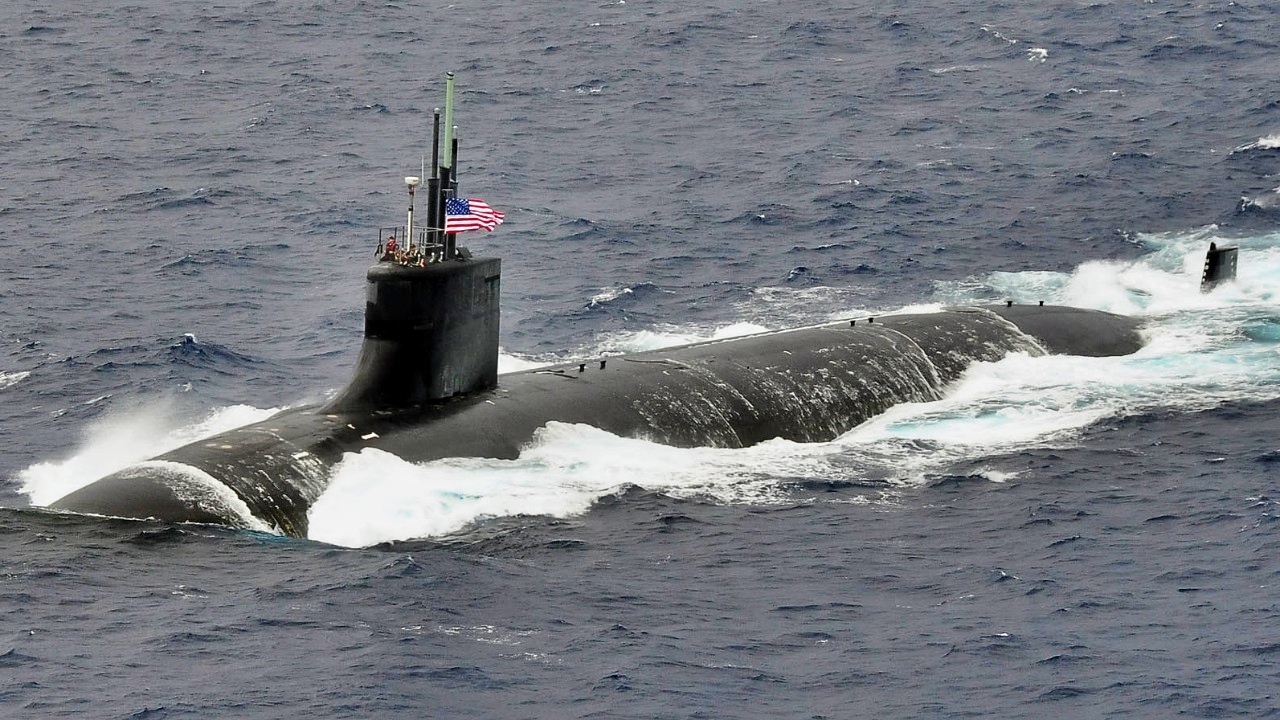
Navy ROTC scholarship student at Duke have a few choices of career on commission, and a very few (1-15) are invited to interview* with Admiral Hyman G. Rickover for a career in Washington D.C. at "Naval Reactors" (NR) to exercise comprehensive responsibility for the safe and reliable operation of the United States Navy's nuclear reactors "from womb to tomb." I was one of them.
NR put me through a six-month crash-degree (eight hours a day, five days a week) in nuclear engineering (MS equivalent) before I was assigned to manage the instrumentation and controls for the USS Enterprise and USS Long Beach.
At the time, NR was embarking on developing the most sophisticated, fastest, quietest, and deadliest nuclear submarine ever built, the USS Seawolf.
Steve Balestrieri wrote in the National Security Journal on September 10, 2025:
The Navy and the designers stuffed every crevice with the very best technology that money could buy. And the price tag showed it.
However, the submarine was in a class all by itself. The hull was designed to withstand deeper dives; it weighed 9,000 tons, it could carry 50 torpedoes and cruise missiles, and the stealth of the boat was unsurpassed. The boat was about 300 yards long, packed with weapons and technology, and quieter than a church mouse.
From garage to board room, I've ridden the beast. I incorporated my first company from a little desk in my son's nursery - the effective garage for Ribbit, and over the my career, have touched just about every role or step a startup goes through.
How I can help:
A short list of the many elements founders face I can help with:
- formation,
- board resolutions,
- equity allocations,
- options plans,
- board management,
- first funds in as
- SAFEs,
- convertible equity,
- or priced rounds,
- through product design and build,
- team formation,
- creating operating policies,
- building sales processes,
- customer success systems,
- marketing,
- branding,
- and business development,
- through selling and post-acquisition operations.
As an executive advisor, I help startup CEOs build strategies for their business and act as their personal sounding board. CEOs can find themselves caught between employee-team members and board members that are great, but "not your friends." A confidential executive advisor outperforms an LLM, is inherently empathetic, has observed some form of most things at least once, and can tap into a network of other experienced professionals for assistance.

At IP, my team and I literally conceived of, designed, and built a brand new industry-changing manufacturing process. Faced with intense global competition, we needed to reduce COGS on one of our lead revenue products. So we developed new chemistry and concatenated traditionally separate coating, curing, and printing operations into a single linear process.
This coated product line was just one of many fantastic innovations I had a hand in at International Paper. Al-in-all, a tremendous baseline for my future application of applied artificial intelligence (AI) at Falkonry and operational technology (OT) cybersecurity at Patero.
Division Manager, Engineering Services, IP- Thilmany Division ($250MM)
Led team of 13 project, process engineers, and product development engineers with $12.5MM capital budget. Responsible for new product development, plant engineering, and capital management.
- Led business assessment, funding, design, construction, and commissioning of an all new, industry changing manufacturing process, yielding an unprecedented 31% drop in COGS.
Division Manager, Technology, IP- Akrosil Division ($90MM)
Member of General Manager’s Business Lead Team managing a team of nine in new product development, process improvement, capital management, and project engineering.
- Achieved average ROI of 132% on $1.2MM of invested capital.
- Developed a patented new product, reducing manufacturing cost by 56%.
- Reduced manufacturing waste by 78% on the company’s core production line.
Business Segment Manager, IP- Veratec Division ($270MM)
Responsible for sales, marketing, service, and product development for the $6MM filtration segment.
- Introduced four new products, and increased profit margins on core products by 12% and 29%.
Over- or under-scoping the enterprise sales process is a common pitfall for early stage companies. Enterprise buying involves from five to sixteen people across four functional groups. It can take engagement with 6 to 8 touchpoints to reach a contact within a target buyer, and from 10 to 12 touchpoints just to book a productive meeting.
Enterprise selling takes a strategy backed by patient, tactical execution. What magic happens, be ready for it by being prepared from your I-9, to insurance, to company policies — or face the risk that the buying conditions change while you're fumbling with your company zipper.
People get sick. People have family emergencies. Reorgs happen. Budgets get yanked. Competitors are in the lobby, or worse, in the board room. How fast can you execute on a buy signal?
True story: I flew across the country to pitch the EVP of a global company. While I'm literally on stage behind a podium in front of the "buying group," the EVP turned to a director and said, "I'm convinced. You have budget, let's go with this." By the time my company organized a quote and got in front of the designated director, he had a personal issue that took him off the line. By the time he returned, there had been a reorg and the previous budget was swept away. We never recovered the contract.
Had we walked into the pitch with our ducks in a row, we would have had a quote in hand for signature that day - or at least have it moved from the director to procurement, locking in the budget and approval process.
I help early stage companies with enterprise sales processes and preparedness.
Did you know that the security you're using to view this website is out of date?

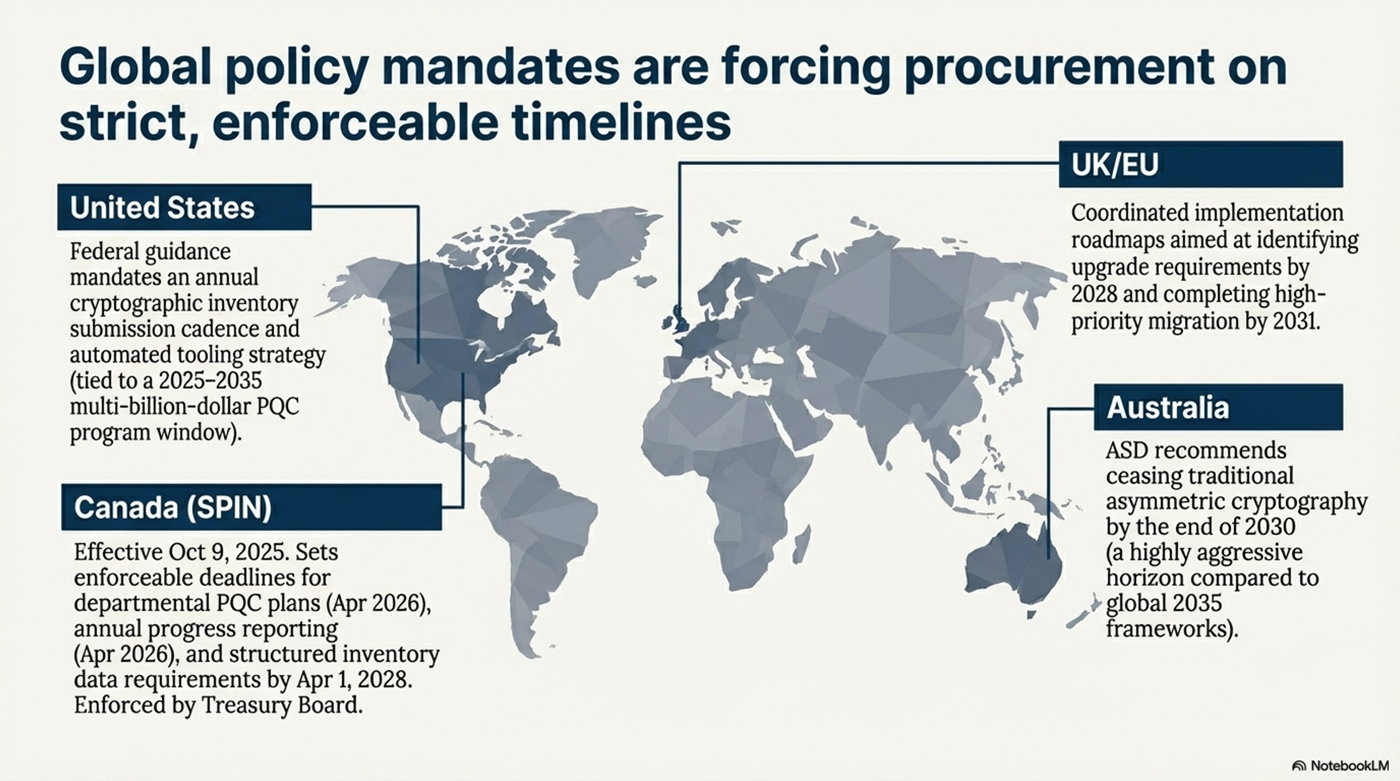
The classical asymmetric cryptosystems we use every day to hide our communication from the people who are actively trying to steel our financial, medical, and private information is obsolete. We're talking about Rivest-Shamir-Adleman (RSA), Elliptic Curve Cryptography (ECC), and Diffie-Hellman -> all of these will be compromised by quantum computers. We know this. That's why the U.S., the EU, Canada, and Australia have all mandated migration to "Post Quantum Cryptography (PQC)".
I know this space well, and co-founded Patero.
There are two things that need to be done:
Figure out what cryptography you're using. This is called a "cryptographic inventory."
Plan and start the process of migrating to PQC
How I can help:
Ask me about giving an executive briefing to your lead team(s).
Want to know how to figure out your risk? I can help with an automated cryptographic discovery and inventory of your IT and OT networks.
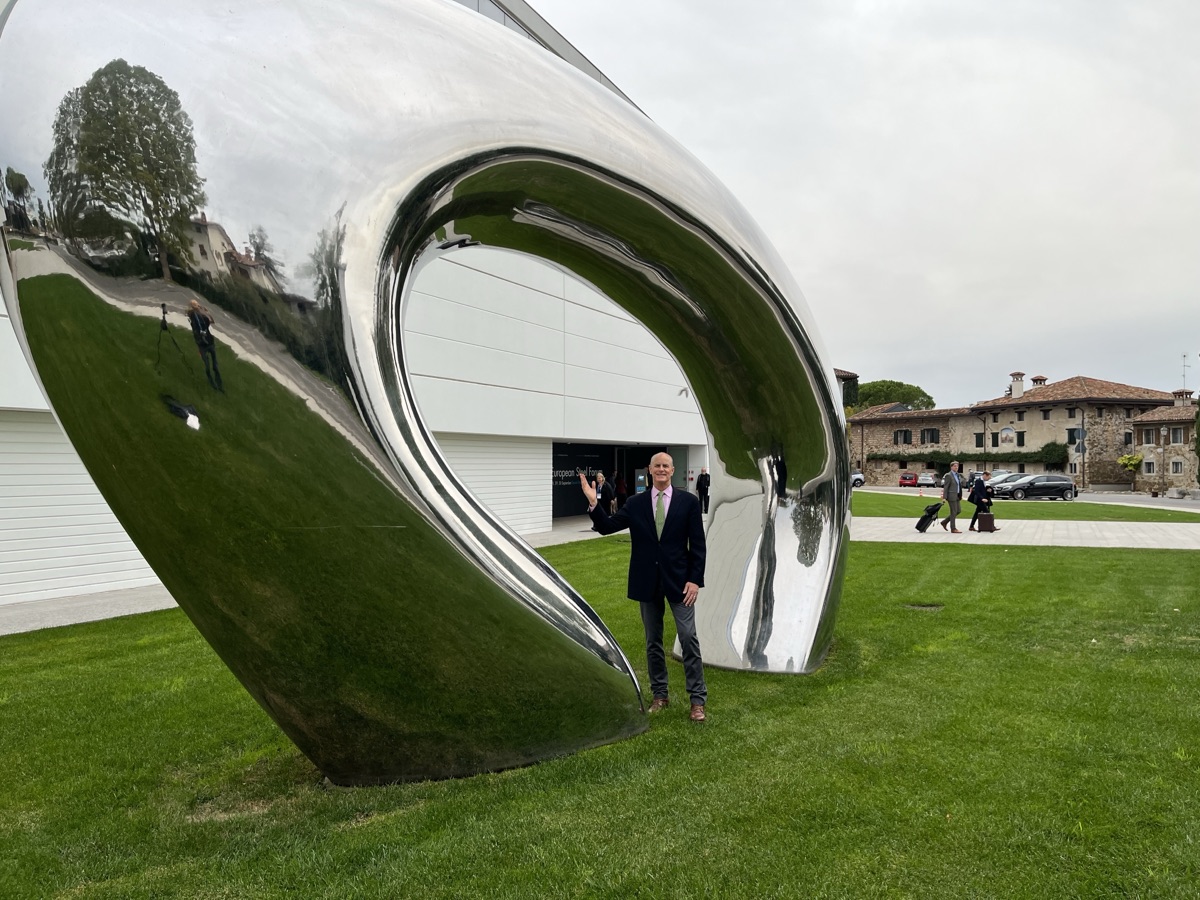
Since childhood, I have been enthralled with communication. I built short-wave radios, hacked walkie-talkies, installed sound-powered phones around my childhood home, formally studied properties fiber optics, and initiated a fiber optic-based research initiative at the Naval Research Lab while I was in the Navy.
The reason I left the Navy to attend Duke's Fuqua School of Business was to get into the fiber-to-the-home movement. When I finally moved to California from Boston, I pursued the emerging digital subscriber line (DSL) industry, landing a position at Northpoint Communications.
There I launched the first U.S. trial of voice over Internet Protocol (VoIP). But Northpoint did not survive the dot-com bust of 2020. Nine months after I joined, we were on the block. I was one of a handful (25 out of > 1,000) Northpointers that were selected to transition with Northpoint after its sale to AT&T."

AT&T was a great experience. Although I had interned at Nortel during business school, AT&T was a progressively thinking service provider. I worked as a VoIP product leader at AT&T, leading broadband and VoIP product management.
While I was AT&T, we launched CallVantage, AT&T's VoIP product, I led AT&T's contract negotiation with Covad Communications to outsource all of AT&T's DSL networking to Covad, and led the engagement between AT&T and the Utah Telecommunication Open Infrastructure Agency (UTOPIA) for delivering consumer voice and video via UTOPIA fiber-to-the-home.
I wasn't long AT&T before the entrepreneurial itch pushed me to make the move from AT&T to create a new kind of telecommunication service, a software-based technology platform that can be controlled by APIs. That company became Ribbit.
I've spent years on and around the manufacturing floor - from heavy industry to light-weight converting operations. Machines are driven by data. Sensors monitor and collect machine data. AI is the magic we use on this data to get more out of manufacturing processes.
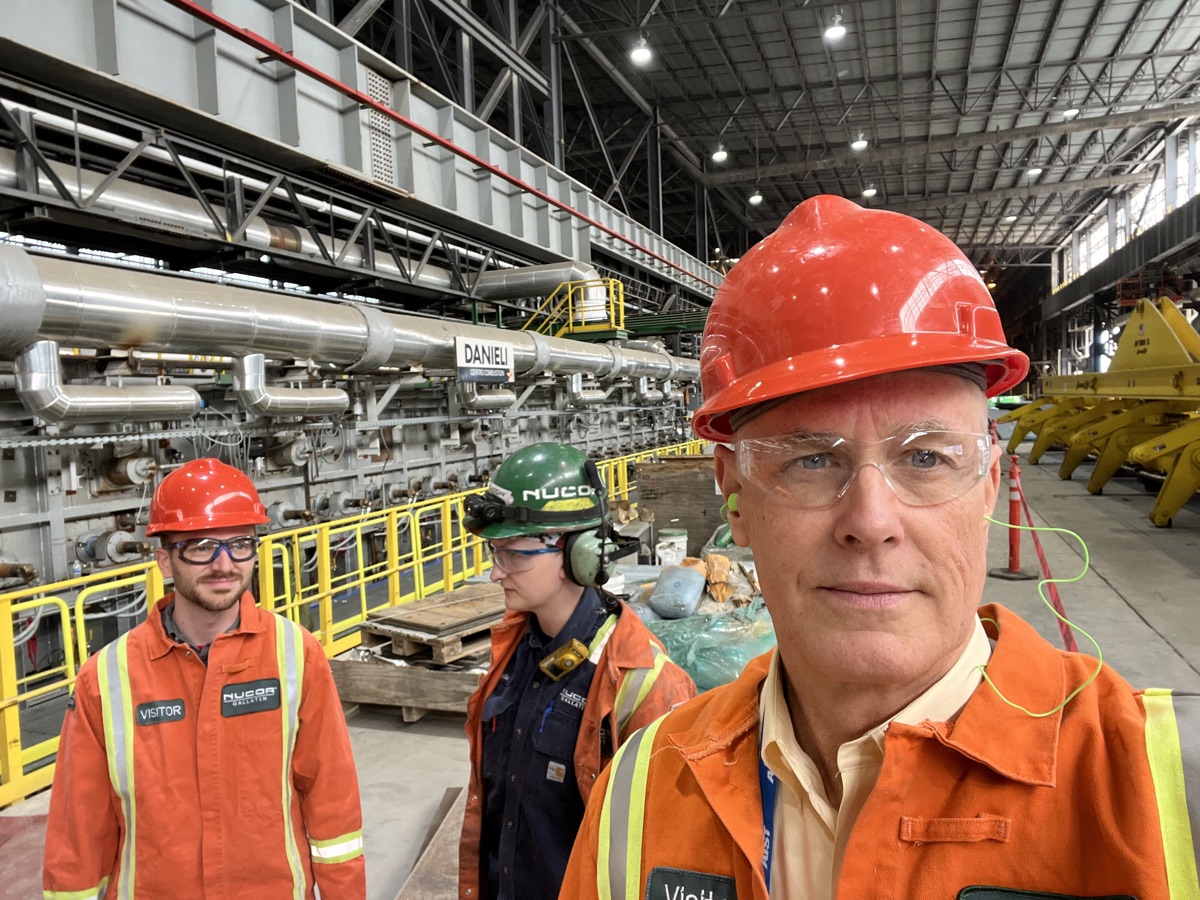
Manufacturing data landed on my plate early in my career — whether from a nuclear reactor or a paper machine. The idea is the same. Sensor information tells the health of the equipment, process, and product quality. When we apply AI to these time-series data streams, anomalies can be picked out of the noise.
Anomalies tell us when things are off - whether it's early indication of a maintenance need or a precursor to quality defects. Both are super valuable.
At Falkonry we developed one of the worlds most advanced anomaly detection system, now used by defense, energy, IT and manufacturing, including the U.S. Navy.
Do you manufacture? Control manufacturing?
Ask me about opportunities to apply AI to optimize outcomes and minimize costs.
I founded Ribbit Corporation, a cloud communications platform that let businesses trigger phone features through web APIs.
While still at AT&T, in mid-year 2004, I pitched a new telephony platform concept to the EVP in charge of innovation at AT&T Consumer. What I didn't know then, is that "the timing is wrong" was code for AT&T was already on the block. It was not long after that AT&T was purchased by SBC. Needless to say, the future of innovation within AT&T was on hold right when I was ready to rock-and-roll.
I've written quite a bit about my decision to start Ribbit on the biography page so won't repeat it here (the full article is on TechCrunch called, The Ribbit Rollercoaster: A Founder's Story).
What I don't talk about in the article is the year of grinding that I did to learn from scratch the operational steps of company founding. Law firm Fenwick & West held a series of seminars for startup CEOs. This was an invaluable education on formation, equity, financing, and the many legal issues that are table stakes when building a founding team.
I also had to go heads-down hard on patent writing. There was no AI to help then, so I took courses and studied like patents in similar telecommunication domains. Hand drawing and writing Ribbit's first patent was a huge undertaking. The experience built a foundation of understanding that serves me today on the patent process. This applies to branding and trademarking as well... Ask me about the Ribbit brand!
Ribbit sold to British Telecom for $100+M in 2008, roughly 3.5x our post-money valuation just months earlier.
BT was terrific to Ribbit. JP Ramaswami and Al Noor Ramji were our sponsors. They brought talent, funding, and commitment to integrate the Ribbit technology stack into the AT&T next-generation voice architecture. After BT's commitment to the Ribbit founders, we slowly drifted away and what was Ribbit in the U.S. was absorbed into the BT tech stack.
My first board seat was with the company I founded, Ribbit. Not unusual to be a founder-board member, but I stayed on the board through growth and after we became a subsidiary of British Telecom (BT).
But my experience extends to outside board member to Alianza. Alianza provides a full-stack cloud communications platform supporting 1,000+ communications service providers across 81 countries, including 19 of the top 20 global operators. Founded in 2009, it focuses on modernizing voice and communication services to meet evolving market demands.
Sometimes the role is advisory. Experience from garage startup to public company leadership allows me to tap incredible consultative resources for executives I advise.
How I can help:
- Outside board member
- Standard, Strategic, or Expert levels of advisory
- Promotion: Advisor will make introductions on behalf of the Company through Advisor’s professional network as opportunities arise.
- Recruiting — assist the Company in identifying candidates for key roles. Contacts — introduce the Company to potential strategic partners and industry contacts.
- Strategic Performance plus: Customers — assist in identifying and meeting with prospective customers. Projects — assist with a specific strategic project as mutually agreed.
- Executive advisor and sounding board
NDAs are a pain in the side of all business development and sales executives. After years of the pain of working NDAs through internal organizational approval and signature processes, I decided there had to be a better way: EasyNDA.
I founded EasyNDA in 2013 with John Q. Smith former VP of Engineering at Ribbit. "Click, Sign, Send" was the motto. The goal was for users to be able to "click" to send a pre-approved NDA to clients, partners, and customers from any device. The recipient would only need to "click to sign" and the NDA would be electronically completed and delivered to all interested parties.
To build EasyNDA, I taught myself HTML, CSS, and JavaScript to build the front end while John did all the heavy lifting on the backend. EasyNDA became a cash-flow positive, self-operating, on-going lifestyle business that solved the universal frustration of NDA execution.
Easy NDA ran itself for eleven years before AI changed the landscape. Speaking of AI, I sure wish I'd had Claude Code in 2013!!
Business Development is not sales, but that does not mean BD should be process driven.
I'm guilty too. Early in career, I was fortunate to work with an executive from Northpoint while we were both at AT&T. The fortunate bit is that the AT&T executive understood that BD is a process, not a random walk of the ecosystem.
Tasked with developing, negotiating, and papering a national internetworking and white-label service agreement for DSL, I learned the brutal difficulty of high-stakes business development, and that method is your friend.
How I can help:
- Differentiating between Sales and Business Development
- Establishing BD objectives and an execution strategy
- Creating a playbook for BD teams against a strategy
- Taking on specific and well defined BD objectives
With multiple foundings, early-stage executive positions, and board seats worth of experience, I have observed just how difficult it is to found, fund, and foster a company.
How I can help:
There are countless articles out there describing the value that startup advisors provide and the role they play. Here is a short list:
Fill in the Skills you need, but don't have on tap
Make Valuable Connections
-
Tailored attention to your needs
Each startup has unique needs. An advisor personalized to your needs aligned with your startup's goals and objectives.
-
Strategize Planning and Execution
Developing a well-defined and effective strategic plan is crucial and something that benefits from an objective viewpoint.
An advisor provides expertise in strategic planning and execution, helping to identify key opportunities, anticipating potential risks, and creating a roadmap for achieving business goals.
-
Provide an Objective Perspective
By challenging assumptions, offering alternative approaches, and applying experience-based observations, an advisor will shine light on blind spots, see operational inefficiencies, and surface innovative solutions to challenging problems.
-
By Stage
-
Seed Stage
This is a critical point when ideas and business models need validation, assessment of market fit, and objective thought on product-market fit.
Advisors play an extremely valuable role building connections with potential investors, partners, industry participants, and lend credibility to the early stage team.
Mentorship in the seed stage can extend to strategic planning, operations, financial planning, marketing, and sales.
-
Early Growth Stage
Scaling strategies enter the picture here, including marketing, sales, customer success, and implementing efficient operations.
Early growth is also when organizational design impacts business operations and drives talent acquisition needs.
-
Expansion Stage
Expansion requires guidance in market expansion and insights on market trends and strategies for entering new markets or segments.
Here, advising assists in navigating funding rounds, managing finances, and even developing exit strategies.
-
Mature Stage
The needs of the mature company are in sustaining growth, developing innovation strategies that are additive not just accretive, and maintaining competitive advantage.
Advisors can provide short-term contract work to facilitate strategic partnerships, mergers or acquisitions, or to enhance the company's market position.
-
Seed Stage
I was introduced to Falkonry's founder, Nikunj Mehta, by another former CEO and business partner of Ribbit's, Greg Olsen. Nikunj realized that AI applied to machine data (time series data from sensors and controllers in manufacturing) could surface anomalous behaviors leading to operations changes for efficiency gains and avoidance of expensive downtime or defect losses.
As the first and only customer-facing executive to join this super early-stage and unfunded startup, I was responsible for all direct commercial operations worldwide, including sales, customer success, and support. As a team, we raised our first funding and opened the doors to the industrial IoT customer base. By melding decades of experience in advanced technology, SaaS product delivery, manufacturing, business development, sales, and customer success, I helped Falkonry achieve global recognition as a leader in operational AI.
- 285% average YoY sales growth since 2016
- 56% of bookings from Customer Success-led renewals and expansions
- ACV from 5 to 7 figures
- Sourced first financing, Launched first product, Secured first sale
- Negotiated first distribution agreement, Orchestrated first partner agreement
- Secured first $400k in partner credits
- Created an International Customer Success department spanning N. and S. America leading customers to their desired outcomes across four continents from Korea to Norway
- Formed and managed global customer support team
If you're company develops any kind of technology, odds are that the government is probably looking for some form of it. At some point, you'll likely be asked, "Have you applied for an SBIR/STTR?"

About SBIR and STTR (click to read)
Through the Small Business Innovation Research (SBIR) and Small Business Technology Transfer (STTR) programs, America’s Seed Fund awards non-dilutive funding to develop your technology and chart a path toward commercialization
Is an SBIR right for your company?
The answer requires strategic thinking, and some introspection about what you want your company to be "when it grows up," and what path to take to get there.
Some companies make a living on SBIRs/STTRs - literally that's what they do. Typically, these are smaller and research oriented companies that are not well suited to dual-use where dual-use must be considered as a strategy rather than a category.
But SBIRs are really difficult to apply for and very difficult to win. The first phase of an SBIR may take a full year to complete (from pen to paper, to final report) and only pay $75,000. That's a huge commitment of your time for very little money.
BUT: SBIRs are one of the best and most accessible paths to government contracts. That's where the business strategy comes into play.
How can I help?
At Falkonry, we leveraged the SBIR program to bring our technology to the U.S. Navy as part of a two-pronged market approach. Our primary push was into the civilian sectors. In parallel, we bet on the SBIR program. Years later, Falkonry enjoys a close business relationship with the U.S. Navy.
At Patero, I took a dual-use approach funding sales and business development on the commercial side while methodically applying for SBIRs. This successful strategy has resulted in two tracks: a commercial and fundable business track and a slower and longer term but potentially extremely rewarding government track.
Let's discuss your business to determine if SBIRs are right for you.
I was recruited to Patero by an industry colleague, Peter Bentley. Patero is a post-quantum cryptography company protecting critical infrastructure and federal/DoD networks. Replacement of classical cryptography with cryptography resistant to quantum-computer is a massive world-wide undertaking. Patero provides a product that is part of that transition.
Though cryptography was not a core competency of mine, getting early stage companies was and is. Getting a technology company from zero to something is all-consuming. Every role has to be filled: finance, HR, corporate governance, technology development, business development, sales, sales operations, customer success, marketing, and fundraising all have to be handled by just a couple of people.
What I appreciate most about the Patero team is that it has managed to bootstrap for five years while the market for post-quantum cryptography has slowly emerged. As a team, we managed a zero-debt operation that landed contracts with tier-one organizations such as a U.S. National Lab, the U.S. Air Force, the state of Virginia, The U.S. Army, a top-three U.S. telecommunications carrier, among others.
I am still very much involved with Patero supporting commercial operations and am thrilled with the company's continued progress!

Family, Swimming, Cycling, & Sourdough
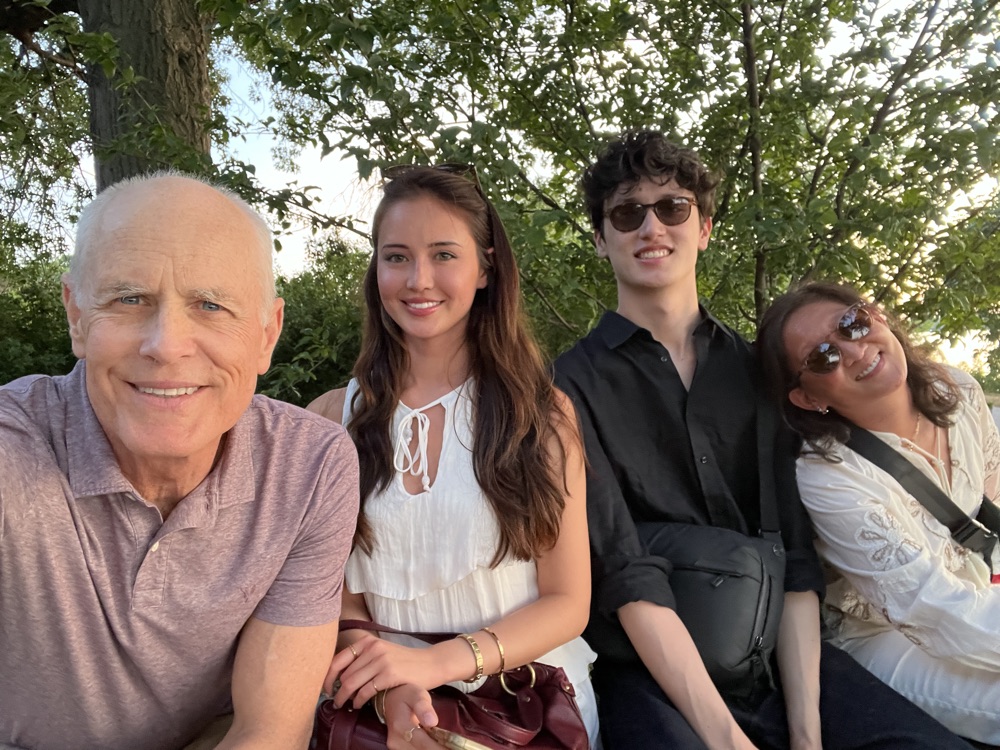
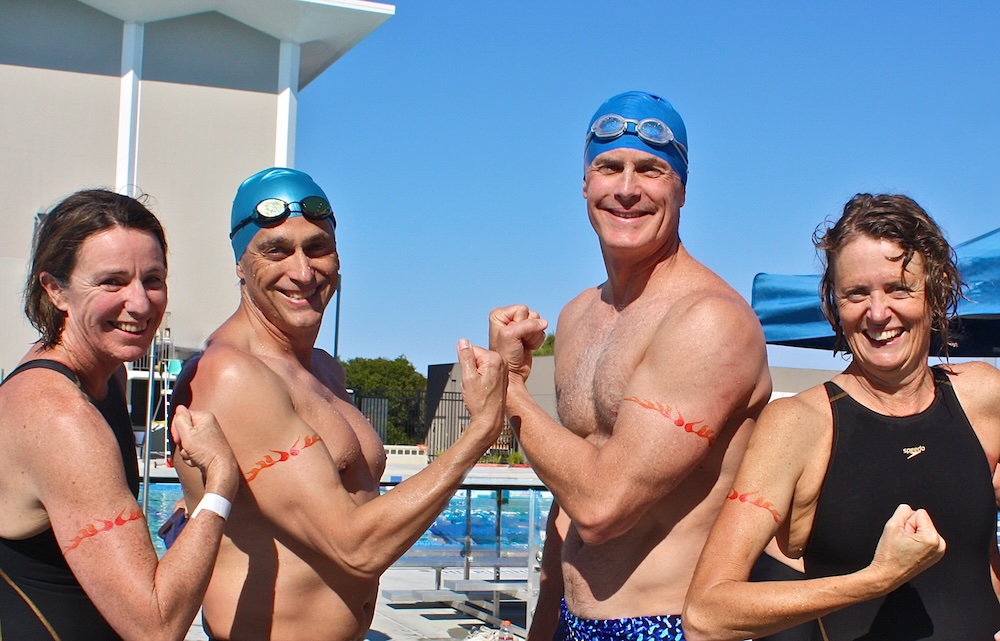
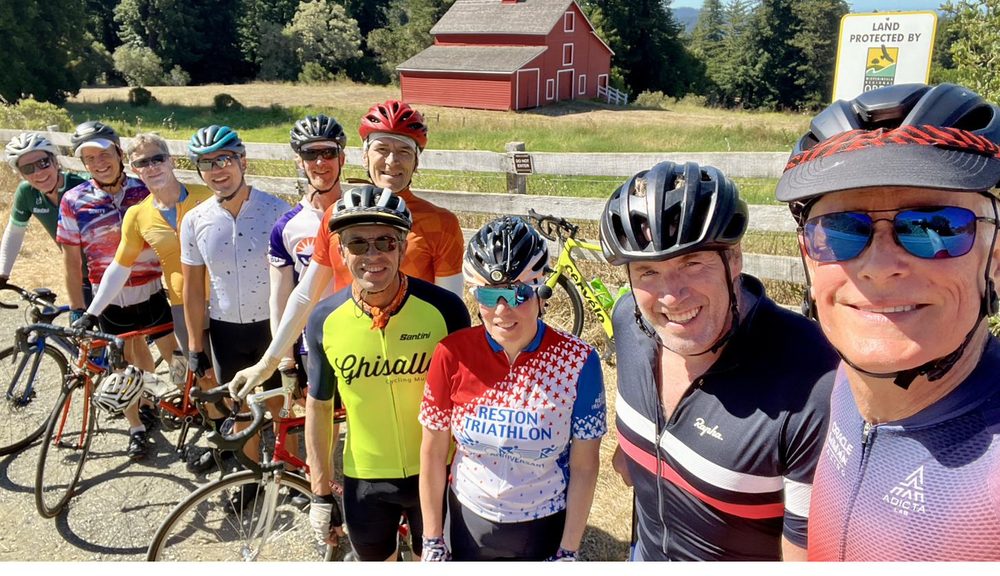
Business has never been the whole story. Off the clock, I swim for Menlo Masters, ride the Bay Area hills, raise service dogs in training with PAWS for Purple Hearts, and spend as much time as I can with my family.
“Advice is worth more than a check, and it’s worth even less the moment it becomes leverage.”— Crick Waters, on advising founders